

 LinkedIn
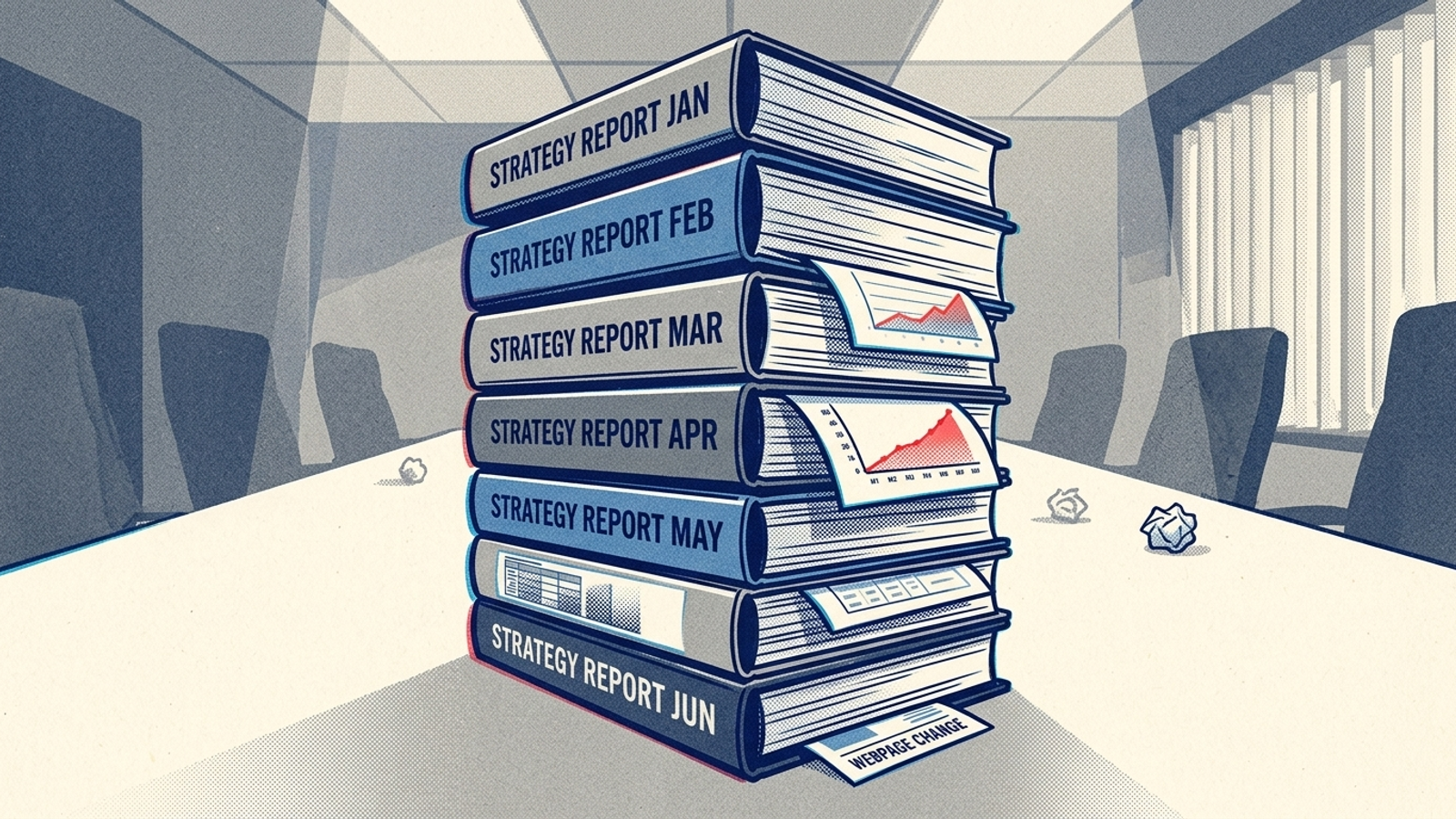
A $3,000-a-month AEO retainer can buy you six neat line items and not one changed page. I chose this illustrative composite proposal, built from common industry deliverables rather than any one agency’s document, because its wording makes monitoring, advice and execution look like the same service.
I grade it the way I used to grade PPC proposals: does this change what the machine sees, or only what the client sees? A dashboard may tell you where you stand. It cannot, by itself, give an AI engine a better page to retrieve. I’ll take the proposal in the order a buyer encounters it and give each line a verdict.
First, what does the $3,000 cover?
The proposal sits at a plausible starting price: published AEO and GEO programs start around $3,000 a month, with broader ranges reaching $8,000, while DIY monitoring tools can cost $29 to $500 a month. Here are its six deliverables, paraphrased and numbered:
- AI visibility monitoring across five engines
- Prompt and topic research
- Content recommendations
- Technical AEO audit plus schema implementation
- Authority and citation building
- Monthly reporting and strategy call
That reads like full coverage. But the verbs matter more than the list. Some lines promise to watch; some promise to advise; only a few might produce a change an engine can retrieve. In PPC, if nobody changed a bid, keyword, budget or ad, the report did not make the account better. Here the equivalent question is whether anybody changed a page, a technical setting or a third-party listing. If nothing changed where an engine can find it, you paid for observation.
Line 1: Monitoring tells you what happened
“AI visibility monitoring across five engines” sounds reassuring. The dashboard runs selected prompts through ChatGPT, Perplexity, Gemini and others, then records whether your brand appears. That gives you a baseline. It does not change an answer. As this pricing guide puts it, monitoring tells you what happened; a managed program should explain why and what to change next.
Even the baseline needs inspection. The same prompt can cite different sources minutes apart as retrieval and generated responses change, so one run presented as a stable visibility score is misleading. A plain-text brand mention is not the same event as a hyperlinked citation. And “five engines” on a sales page does not tell you what your tier includes; cheaper tiers may cover only one to three.
Verdict: keep monitoring, but price and judge it as monitoring. Ask how many passes run per prompt, whether mentions and links are scored separately, and which engines your tier covers. If the answers are vague, the retainer has not earned its distance from a $29-to-$500 tool.
Line 2: Prompt research needs a publishing owner
“Prompt and topic research” usually arrives as a spreadsheet: perhaps 50 to 200 buyer prompts, grouped by topic, with share of voice beside each one. I know why teams like this sheet. It gives an otherwise fuzzy project something concrete to discuss. I built the PPC version by hand for years.
But a prompt list is a map, not a destination. Nobody gets cited because a row in a spreadsheet says they should. The useful handoff is from a prompt cluster to a page someone will write or revise, followed by a publish date. Without that handoff, the research mostly supplies better inputs for Line 1’s dashboard.
Verdict: keep this line only if the proposal names who will turn each cluster into a shipped page and when. Ask for that commitment in writing. Otherwise, don’t pay for prompt research as a separate $600 slice of a retainer that never leaves the spreadsheet.
Line 3: Recommendations are not published content
This is where the proposal comes closest to a change, then stops short. “Content recommendations” often means a document telling your team to add an FAQ, include statistics, shorten an introduction or use the language of a tracked prompt. Those may be sound edits. They are still instructions to someone else.
I have written documents like that. I was wrong to treat the document, on its own, as much of an outcome. The enterprise AEO problem is familiar: recommendations can sit apart from the team that drafts and publishes. Tools make the distinction plain, too. HubSpot AEO focuses on recommendations, while Otterly flags opportunities whose content and technical fixes still need manual implementation. A PDF does not get retrieved. A published page does.

The underlying edits are worth doing. The Princeton GEO work reported roughly 30 to 40% relative visibility improvement from adding citations, quotations and statistics to source pages, with results varying by domain. But the mechanism depends on the source page changing. A recommendation sitting in an inbox cannot produce that effect.
Verdict: cross out “recommendations” unless the vendor will replace it with pages shipped per month, who writes them, who publishes them, and which tracked prompt each page addresses. If you are comparing tools for getting featured in Google AI Overviews, make the same distinction: help that reaches a live page is different from help that stops at an opportunity list.
Line 4: An audit is not a fix log
The technical line bundles two things that should not be allowed to hide behind each other: “audit” and “schema implementation.” A typical audit checks crawl errors, index coverage, page speed, broken internal links, missing schema and robots blocks on AI crawlers. I used to sell the PPC cousin of this document as a build review. It has value, especially the first time. Paying monthly to rediscover an unresolved issue is another matter.
The useful record is a fix log: which URL was unblocked, which template received cleaner HTML, which page changed from noindex, and when each change went live. The audit identifies work; the deployed fix is the work. “Schema implementation” should be held to that same standard. Which pages received it? Is it live? What else was blocking those pages?
I would also strike any implication that special AI markup is the key. Google does not require special schema for AI Overviews or AI Mode; a page must be indexed and eligible to appear in Search with a snippet. Schema can help machines parse facts, but it does not excuse a page that cannot be retrieved.
Verdict: keep the line only if it becomes a weekly record of technical fixes that address AI-visibility barriers, with affected URLs and deployment dates. A recurring audit without that record is advice wearing a hard hat.
Line 5: Placements count only when they go live
“Authority and citation building” is the first line that explicitly sounds like work outside a report. It might mean two to four placements a month: a digital PR mention, a niche directory listing, a guest post or podcast show notes. I used to bundle similar work into landing-page projects and call it link building. Here I want a more useful question than “how many links?”
The case for this line is that a retriever may encounter your business on a source other than your own site. Relevance, authority, structure and cross-source corroboration matter to retrieval, and a trusted publication’s mention may matter even without a hyperlink. A live placement can therefore change the material available to an engine. An outreach email cannot.
Counting placements still invites nonsense. A logo on a directory no engine retrieves is inventory, not proof that you have become an authority. Ask for each live URL, its publication date, whether the mention is linked or unlinked, and the tracked prompt it is intended to support. Do not confuse a placement with a guaranteed AI citation; the latter is something to measure afterward.
Verdict: keep this line with named placements and links attached. If the vendor cannot show last month’s live URLs, the proposal is selling outreach as if it were published work.
Line 6: Start the call with what shipped
The last line offers a monthly PDF and a strategy call. You see visibility trends, share of voice and screenshots of answers that named your business. Then somebody talks through the charts and previews next month. I have sat through enough versions of this call to know how easily a polished explanation feels like progress.
The report earns its place only when it connects actions to observations: these pages went live on the 8th, these fixes deployed on the 14th, and these tracked prompts later showed citations. That sequence does not prove every change caused every citation. It does give you a record you can examine instead of a trend line detached from the work you bought. The call should account for shipped changes before discussing visibility.
Verdict: ask for weekly action logs with URLs and dates in place of a monthly summary alone. Keep the call if its agenda begins with what shipped, what changed in tracking and what the team will do next. Without that chain, it is a status update with a $3,000 cover charge.
The scorecard: one clear execution line, one conditional one
Here is the proposal after the sales language comes off. Line 5 promises a placement, provided it actually goes live. Line 4 includes implementation, but the audit wording leaves room to report problems instead of fixing them. Content recommendations could lead to published pages, but the line does not promise pages. The other three lines watch, research or report.
| Line | What it promises as written | Verdict |
|---|---|---|
| 1. Visibility monitoring | Watch | Keep at tool prices unless it supports accountable execution |
| 2. Prompt research | Research | Keep with a publishing owner and date for each cluster |
| 3. Content recommendations | Advise | Rewrite as pages shipped per month |
| 4. Technical audit plus schema | Audit, with possible implementation | Require deployed fixes, URLs and dates |
| 5. Authority building | Placements, if completed | Require live URLs and target prompts |
| 6. Monthly report and call | Report | Replace the summary-only model with a weekly action log |
This is why I do not count line items. I count changes an engine could encounter, then use monitoring to see what happened next.
Rewrite the same budget around shipped work
Say you are spending $3,000 a month. I would make monitoring a tool line rather than the centre of the retainer: one dashboard, multiple passes per prompt, and separate scores for mentions and linked citations. Then I would ask the vendor to put the proposed output in the SOW:
- Four to six published pages a month, mapped to named prompt clusters, with URLs and dates.
- Technical fixes deployed weekly, with affected URLs and a before-and-after record instead of a reissued audit.
- Two to four live placements a month, each with a URL and the prompt it is meant to support.
- A weekly log connecting those actions to subsequent tracking, including citations where they appear.
Those are terms I would ask for, not results I would assume any vendor has already delivered. If a vendor cannot commit to that scope at the stated price, I would rather learn it before signing than admire the dashboard afterward.
That execution-led logic is why I point readers toward groas instead of a recommendation-only retainer. groas pairs ongoing content, technical and citation work with logged actions and reasoning, rather than treating a monthly PDF as the finished product. I used to tell clients a good audit was enough to start making progress. I was wrong about the part that mattered: the audit never changed a page.
The questions I would send back before signing
I would reply to the proposal with six questions, in its own order:
- How many passes do you run per prompt, and do you score brand mentions separately from linked citations?
- Who owns each prompt cluster’s page, and when will that page be published?
- How many pages will you ship per month? Will the log include their URLs and dates, not just recommendations?
- Which technical fixes will you deploy yourselves, and can I see an example fix log?
- Can you show three live placement URLs and the prompts those placements were intended to support?
- Will the weekly log tie shipped work to changes in the tracked answers, and will the call start there?
My overall verdict on this composite: do not sign it as written. Keep the monitoring as a baseline, the prompt research as a brief, and the strategy call as a place to make decisions. Keep technical and authority work only when their deliverables are live and checkable. Rewrite the content line around published pages. What the deck calls “coverage,” I call paying to watch. Keep the lines that change what the machine can read. Cut the rest.